Within Roswell
Project Mogul
Project Mogul was a secret United States Army Air Forces programme created to solve an urgent early Cold War problem: how could the United States detect a Soviet nuclear test conducted thousands of miles away?

Page outline Jump by section
Introduction
This nuclear-monitoring purpose is central to the leading official explanation of the Roswell debris. The US Air Force concluded in 1994 that material recovered near Roswell in 1947 most probably came from an unrecovered Mogul balloon train rather than an extraterrestrial craft. The explanation fits the programme’s location, timing and construction materials, although the identification of one particular launch—usually called Flight 4—depends on reconstruction rather than a complete surviving flight record.[af.mil]dafhistory.af.milDAF History The Roswell ReportRichard L. Weaver and 1st Lt. James McAndrew to address the request made by Representative Steven H. Schiff (R-NM) for info…
Why nuclear detection required an unusual experiment
When Project Mogul began, the United States possessed atomic weapons but did not know when the Soviet Union would acquire and test one. Direct observation inside Soviet territory was extremely difficult, satellites did not yet exist, and the physical signatures of a nuclear explosion had to be detected at great distance. Monitoring a test was therefore not merely a scientific exercise; it was a strategic intelligence priority.
Geophysicist Maurice Ewing proposed exploiting an atmospheric counterpart to the long-distance sound channel he had studied in the oceans. Variations in temperature and wind can refract sound waves, bending them back towards regions where the speed of sound is lower. Under suitable conditions, low-frequency waves can become channelled through the atmosphere and travel far beyond the range expected from ordinary audible sound. Project Mogul sought to place microphones inside or near such a channel and listen for pressure waves produced by large explosions or missile launches.[lbl.gov]muller.lbl.govProject MOGUL initially focused on three areas of technology: (1) an expendable microphone, capable of detecting, at long range, low-freq…
The proposed system required three linked technologies:
- Sensitive acoustic detectors capable of registering low-frequency signals from distant explosions.
- Radio telemetry to transmit measurements from the airborne instruments to receivers on the ground or in aircraft.
- A stable high-altitude platform that could keep the instruments at approximately the required atmospheric level for long enough to gather useful data.
The last requirement was especially difficult. Conventional weather balloons rose until they burst or gradually changed altitude as their lifting gas expanded, leaked or cooled. Mogul researchers therefore experimented with connected balloon arrays, ballast arrangements and altitude-control methods. Much of the project’s practical work was conducted through New York University under the outward appearance of atmospheric and balloon research, while the nuclear-intelligence objective remained classified.[DAF History]dafhistory.af.milDAF History The Roswell ReportRichard L. Weaver and 1st Lt. James McAndrew to address the request made by Representative Steven H. Schiff (R-NM) for info…
What a Mogul balloon train actually looked like
A Mogul apparatus was not simply one weather balloon carrying a small instrument box. Early experimental trains could contain numerous neoprene balloons linked by a long line, together with instruments, parachutes and radar reflectors. Some assemblies extended for hundreds of feet. Their size made them difficult to launch, track and recover, but much of their structure consisted of exceptionally light and fragile material.[nmsr.org]nmsr.orgRoswell MogulSource details in endnotes.
Radar reflectors were attached so tracking crews could follow the balloons. The commonly used ML-307 reflector was a lightweight angular structure made from balsa-wood supports, metallic foil, paper and adhesive tape. When intact, it presented flat reflective surfaces to radar; after falling and breaking apart, it could leave scattered foil, sticks, rubber and tape over a broad area.
Those materials are important because contemporary descriptions attributed to rancher William Brazel included rubber strips, foil-like material, paper, sticks, tape and eyelets. Reports also mentioned markings or coloured designs on some tape. The Air Force investigation argued that these details were consistent with commercially manufactured decorative tape used in assembling certain radar targets, rather than writing or symbols on an unknown vehicle.[af.mil]dafhistory.af.milDAF History The Roswell ReportRichard L. Weaver and 1st Lt. James McAndrew to address the request made by Representative Steven H. Schiff (R-NM) for info…
The resemblance is not perfect in every later account. Decades after 1947, some witnesses described foil that returned to its original shape, beams that could not be cut or burned, and other apparently extraordinary properties. No authenticated sample of such material is available for laboratory examination, however, and these descriptions entered the record long after the debris had disappeared. The earliest newspaper accounts describe relatively ordinary lightweight wreckage rather than a substantial aircraft structure. The evidential value of the later claims therefore depends heavily on memory and testimony rather than surviving physical material.[Internet Archive]ia801309.us.archive.orgOpen source on archive.org.
The Alamogordo flights and the Roswell connection
Mogul balloon work moved to Alamogordo Army Air Field in New Mexico in 1947, where the climate and nearby military ranges offered suitable conditions for launches and explosive tests. This placed the project within the same regional military landscape as Roswell Army Air Field, White Sands Proving Ground and the wartime atomic programme.
The Air Force’s Roswell investigation reconstructed a sequence of New York University balloon operations conducted in June and July 1947. It concluded that an early balloon train launched in the first week of June, conventionally labelled Flight 4 in later discussions, was the most likely source of the debris found on the Foster ranch northwest of Roswell. Project scientist Charles B. Moore later modelled the possible route using historical wind data and information from better-documented flights, arguing that the train could have travelled towards the ranch before descending.[af.mil]dafhistory.af.milDAF History The Roswell ReportRichard L. Weaver and 1st Lt. James McAndrew to address the request made by Representative Steven H. Schiff (R-NM) for info…
This reconstruction offers several points of correspondence:
- The apparatus was launched from southern New Mexico during the relevant period.
- Its projected path could take it north or north-east towards the area where the debris was found.
- At least one early train was not recovered by the Mogul team.
- Its balloons, reflector panels and connecting hardware could produce the broad mixture of rubber, foil, paper and light wooden fragments described in 1947.
- A rancher might not immediately recognise the wreckage as a conventional weather instrument because the train was considerably more elaborate than a routine radiosonde balloon.
The timing is less straightforward than a simple statement that a balloon “crashed at Roswell” suggests. Brazel’s recollections of when he first noticed the material varied in the contemporary press, and the debris was not reported to the authorities until early July. A balloon lost in June could have remained on an isolated ranch for weeks before being collected, particularly if the discovery was initially considered unimportant. The Air Force regarded this as compatible with a June Mogul launch, but the gap prevents a precise, continuous chronology from launch to recovery.[DAF History]dafhistory.af.milDAF History The Roswell ReportRichard L. Weaver and 1st Lt. James McAndrew to address the request made by Representative Steven H. Schiff (R-NM) for info…
Was Flight 4 launched or cancelled?
The most persistent technical objection to the Mogul explanation concerns a diary entry by project officer Albert Crary. It records that planned balloon operations on 4 June were cancelled because of cloud cover, followed by activity involving a cluster of balloons and a sonobuoy. Critics interpret this as evidence that the full balloon train later designated Flight 4 never left the ground. If no relevant apparatus was launched, it could not have produced the Roswell debris.
Supporters of the Mogul explanation distinguish between the cancellation of a fully instrumented, officially monitored flight and the release of a smaller or less formal balloon assembly later that morning. The Air Force report and Moore’s reconstruction treated the latter activity as the probable lost train. Numbering is also a source of confusion: the label “Flight 4” was applied retrospectively in the reconstruction and does not appear as an unambiguous completed-flight entry in a surviving launch log.[af.mil]dafhistory.af.milDAF History The Roswell ReportRichard L. Weaver and 1st Lt. James McAndrew to address the request made by Representative Steven H. Schiff (R-NM) for info…
The dispute cannot be resolved by pointing to a single document showing a complete chain of custody. No surviving record states, in effect, that a particular numbered Mogul train was launched, tracked to the Foster ranch, recovered by Roswell personnel and delivered to Fort Worth. The case is cumulative: location, likely trajectory, missing equipment, contemporary debris descriptions and project materials are combined to identify Mogul as the most plausible source.
That distinction matters. “The debris was consistent with Project Mogul and most probably came from it” is stronger than saying merely that secret balloons existed, but it is more cautious than claiming documentary proof that a uniquely identified flight landed at a precisely recorded point. The official report itself used probabilistic language, concluding that the material was “most likely” associated with an unrecovered Mogul device.[DAF History]dafhistory.af.milDAF History The Roswell ReportRichard L. Weaver and 1st Lt. James McAndrew to address the request made by Representative Steven H. Schiff (R-NM) for info…
Why the military called it a weather balloon
The public explanation given in July 1947—that the wreckage came from a weather balloon and radar target—was incomplete but not wholly false. Mogul used balloon and radar-tracking technology closely related to ordinary meteorological work. Revealing its real purpose would have disclosed that the United States was developing a method to monitor Soviet nuclear and missile activity.
Compartmentalisation helps explain why Roswell officers could have mishandled the announcement even if the debris was military equipment. Personnel at Roswell Army Air Field were not necessarily briefed on a classified experimental programme run from Alamogordo through research organisations and other commands. The officer who issued the initial “flying disc” press release could therefore have treated the unfamiliar wreckage as a local identification problem, while senior officers with wider security responsibilities had reason to replace that description quickly with a harmless cover explanation.[DAF History]dafhistory.af.milDAF History The Roswell ReportRichard L. Weaver and 1st Lt. James McAndrew to address the request made by Representative Steven H. Schiff (R-NM) for info…
This interpretation involves a genuine concealment, but not the concealment alleged in the extraterrestrial version of the story. The classified fact would have been the nuclear-monitoring experiment, not the recovery of an alien spacecraft. In that sense, the abrupt reversal from “flying disc” to “weather balloon” may have encouraged later suspicions precisely because the second explanation omitted the most important reason for military secrecy.
The official record is still incomplete. A 1995 investigation by the US General Accounting Office found that certain Roswell Army Air Field administrative records and outgoing messages had been destroyed under circumstances that could not then be fully documented. The GAO did not find records establishing an extraterrestrial crash, and the missing files do not prove that evidence was deliberately removed. They do, however, limit the possibility of reconstructing every decision taken by Roswell personnel in July 1947.[Government Accountability Office]gao.govnsiadNSIAD-95-187…
From balloon microphones to global test monitoring
Project Mogul did not become a dependable operational system for detecting Soviet tests. Maintaining large balloon arrays at the correct altitude was expensive and unreliable, weather complicated launch and tracking, and the assemblies were difficult to keep secret. By the end of the 1940s, other monitoring methods offered greater practical value.[Global Security]globalsecurity.orgOpen source on globalsecurity.org.
The first Soviet atomic test in August 1949 was detected not by Mogul but through airborne collection of radioactive material. Specially equipped US aircraft sampled atmospheric debris whose radioactive composition indicated that a nuclear explosion had occurred. Seismic monitoring, ground-based acoustic instruments and radionuclide sampling subsequently became major components of nuclear intelligence and treaty verification.
Mogul’s basic scientific idea was nevertheless sound. Nuclear explosions can generate infrasound—pressure waves below the lower limit of normal human hearing—that travels over great distances through the atmosphere. The principal change was to move from fragile microphones suspended beneath balloon trains to networks of permanent, carefully calibrated ground stations.
Today, the Comprehensive Nuclear-Test-Ban Treaty Organization’s International Monitoring System combines four complementary technologies: seismic stations for vibrations through the Earth, hydroacoustic stations for sound in the oceans, infrasound stations for low-frequency atmospheric waves, and radionuclide stations and laboratories for radioactive particles and gases. Infrasound can help locate a large atmospheric explosion, while radionuclide evidence can determine whether an event was nuclear rather than chemical or natural.[ctbto.org]ctbto.orgOpen source on ctbto.org.
The contrast is striking. Mogul attempted to listen for a Soviet test using experimental balloons over New Mexico; the modern system continuously gathers data from hundreds of facilities distributed around the world. Its infrasound sensors are sensitive enough to detect not only explosions but volcanic eruptions, rocket launches and meteors, including the 2013 Chelyabinsk event recorded by stations across several countries.[ctbto.org]ctbto.orgOpen source on ctbto.org.
What Project Mogul explains—and what it does not
Project Mogul provides a coherent explanation for the original physical debris at the centre of the Roswell incident. It supplies a documented secret programme, operating in the correct region and period, using materials resembling those described in the earliest accounts. It also explains why the public “weather balloon” statement could be materially misleading without requiring an extraterrestrial recovery.
Its strongest evidential features are the match between known balloon equipment and the contemporary debris descriptions, the presence of unrecovered experimental trains, and the strategic reason for secrecy. Its weakest feature is the absence of an intact documentary chain tying a conclusively identified launch to the precise ranch location.
Mogul does not by itself explain every claim subsequently attached to Roswell. Stories of bodies, hospital activity, additional crash sites and extraordinary materials developed mainly through testimony collected decades later. The Air Force addressed many of those claims separately, often by proposing that later military accidents and high-altitude dummy tests had become blended with memories of 1947. Those arguments are distinct from the Mogul evidence and should not be treated as necessary proof that the balloon explanation for the original debris is correct.
The most defensible conclusion is therefore narrower than either extreme of the debate. Project Mogul is not merely a generic suggestion that “some balloon” may have fallen. It was a real, highly classified nuclear-monitoring experiment whose equipment closely matches the earliest Roswell evidence. Yet the specific identification of the debris with the reconstructed Flight 4 remains a historical inference supported by converging evidence, not a recovery record that settles every detail beyond dispute.
Amazon book picks
Further Reading
Books and field guides related to Project Mogul. Use these as the next step if you want deeper reading beyond the article.
Area 51
The explosive, untold story of the Cold War's biggest secret from the bestselling author of NUCLEAR WAR: A SCENARIO 'An extraordinary boo...
Roswell: Inconvenient Facts and the Will to Believe
For over fifty years an incident near Roswell, New Mexico, has sparked the imaginations of UFO enthusiasts. Did the military recover a cr...
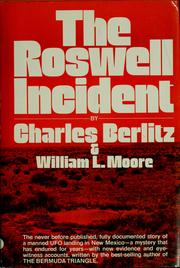
The Roswell Incident
The Roswell Incident was the most important UFO encounter of our century. But the facts about the incident are still being hidden from th...
Skunk Works
This classic history of America's high-stakes quest to dominate the skies is "a gripping technothriller in which the technology is real"...
eBay marketplace picks
Marketplace Samples
Live-tested eBay searches with available results related to this page.
Selected fromCold War aviation poster oneBay.co.uk.



Endnotes
1.
Source: gao.gov
Title: nsiad 95 187
Link:https://www.gao.gov/products/nsiad
Source snippet
NSIAD-95-187...
2.
Source: nmsr.org
Title: Roswell Mogul
Link:https://www.nmsr.org/wp-content/uploads/2026/07/RoswellMogul.pdf
Source snippet
[https://www.nmsr.org/wp-content/uploads/2026/07/RoswellMogul.pdfMarch](https://www.nmsr.org/wp-content/uploads/2026/07/RoswellMogul.pdfMarch) 21, 2019 — Special Report The Roswell Incident and Project Mogul Sc...
Published: March 21, 2019
3.
Source: ia801309.us.archive.org
Link:https://ia801309.us.archive.org/7/items/NSAUFO/Report%20AF%20Roswell.pdf
4.
Source: ctbto.org
Link:https://www.ctbto.org/our-work/monitoring-technologies/infrasound-monitoring
5.
Source: ctbto.org
Link:https://www.ctbto.org/our-work/international-data-centre
6.
Source: ctbto.org
Link:https://www.ctbto.org/our-work/verification-regime
7.
Source: ctbto.org
Link:https://www.ctbto.org/our-work/monitoring-technologies
8.
Source: ctbto.org
Link:https://www.ctbto.org/our-work/ims-map
9.
Source: ctbto.org
Title: infrasound stations detect russian meteorite blast
Link:https://www.ctbto.org/news-and-events/news/ctbto-infrasound-stations-detect-russian-meteorite-blast
10.
Source: ctbto.org
Title: ctbt verification system hits 300 certified facilities
Link:https://www.ctbto.org/news-and-events/news/ctbt-verification-system-hits-300-certified-facilities
11.
Source: archive.org
Title: AFD 101027 030
Link:https://archive.org/details/AFD-101027-030
12.
Source: ctbto.org
Title: new flash animations explain how monitoring technologies work
Link:https://www.ctbto.org/news-and-events/news/new-flash-animations-explain-how-monitoring-technologies-work
13.
Source: ctbto.org
Title: monitoring station operators all over world gather vienna
Link:https://www.ctbto.org/news-and-events/news/monitoring-station-operators-all-over-world-gather-vienna
14.
Source: gao.gov
Link:https://www.gao.gov/assets/a95575.html
15.
Source: gao.gov
Link:https://www.gao.gov/assets/a250766.html
16.
Source: gao.gov
Link:https://www.gao.gov/assets/a111468.html
17.
Source: gao.gov
Title: 02 420t
Link:https://www.gao.gov/products/gao-02-420t
18.
Source: ia601309.us.archive.org
Title: Report AF Roswell
Link:https://ia601309.us.archive.org/7/items/NSAUFO/Report%20AF%20Roswell.pdf
19.
Source: archive.org
Title: DTIC ADA326147
Link:https://archive.org/details/DTIC_ADA326147
20.
Source: gao.gov
Link:https://www.gao.gov/products/154832
21.
Source: gao.gov
Link:https://www.gao.gov/products/t-aimd
22.
Source: gao.gov
Title: b 260402
Link:https://www.gao.gov/products/b-260402
23.
Source: gao.gov
Link:https://www.gao.gov/products/b-259222%2Cb-259222.2%2Cb-259224.2%2Cb-259224
24.
Source: gao.gov
Title: b 258931
Link:https://www.gao.gov/products/b-258931
25.
Source: gao.gov
Title: aimd 94 1
Link:https://www.gao.gov/products/aimd
26.
Source: gao.gov
Title: afmd 93 19
Link:https://www.gao.gov/products/afmd
27.
Source: ctbto.org
Link:https://www.ctbto.org/resources/information-materials/frequently-asked-questions
28.
Source: www-dev.ctbto.org
Title: infrasound monitoring
Link:https://www-dev.ctbto.org/what-we-do/monitoring-technologies/infrasound-monitoring
29.
Source: ctbto.org
Link:https://www.ctbto.org/resources/for-researchers-experts/vdec
30.
Source: dafhistory.af.mil
Title: DAF History [The Roswell Report]({{ ‘the-roswell-report/’ | relative_url }})
Link:https://www.dafhistory.af.mil/Portals/16/documents/AFD-101201-038.pdf
Source snippet
Richard L. Weaver and 1st Lt. James McAndrew to address the request made by Representative Steven H. Schiff (R-NM) for info...
31.
Source: muller.lbl.gov
Link:https://muller.lbl.gov/teaching/physics10/Roswell/USMogulReport.html
Source snippet
Project MOGUL initially focused on three areas of technology: (1) an expendable microphone, capable of detecting, at long range, low-freq...
32.
Source: sciencefriday.com
Title: Science Friday The Real Roswell Cover-Up?
Link:https://www.sciencefriday.com/articles/the-real-roswell-cover-up-spying-on-air/
Source snippet
Spying On AirMaurice Ewing first worked out the physics of the sound channel in 1944.... Ewing was pretty optimistic about Project Mogul...
33.
Source: globalsecurity.org
Link:https://www.globalsecurity.org/intell/systems/mogul.htm
34.
Source: Wikipedia
Title: Roswell incident
Link:https://en.wikipedia.org/wiki/Roswell_incident
35.
Source: anomalydesk.com
Title: roswell incident
Link:https://anomalydesk.com/roswell-incident.html
36.
Source: Wikipedia
Title: Project Mogul
Link:https://en.wikipedia.org/wiki/Project_Mogul
37.
Source: disclosdex.com
Title: The Roswell Incident | Disclosdex
Link:https://disclosdex.com/events/the-roswell-incident
38.
Source: archives.gov
Title: New Mexico | National Archives
Link:https://www.archives.gov/nhprc/projects/states-territories/nm.html
39.
Source: jstor.org
Link:https://www.jstor.org/stable/26965566?read-now=1
40.
Source: muller.lbl.gov
Title: Roswell Incident
Link:https://muller.lbl.gov/teaching/physics10/Roswell/RoswellIncident.html
41.
Source: af.mil
Link:https://www.af.mil/The-Roswell-Report/_bhlid/f4a0c3623ce5085676f0426ec242a4ba91786be7/
42.
Source: dafhistory.af.mil
Link:https://www.dafhistory.af.mil/The-DAF-Legacy-Vault/AFHRA-Studies-and-Interviews/igphoto/2003789023/
43.
Source: afhistory.af.mil
Title: 1962 cuban missile crisis
Link:https://www.afhistory.af.mil/FAQs/Fact-Sheets/Article/458954/1962-cuban-missile-crisis/
44.
Source: afhistory.af.mil
Title: 1953 the emergence of the strategic air command
Link:https://www.afhistory.af.mil/FAQs/Fact-Sheets/Article/458963/1953-the-emergence-of-the-strategic-air-command/
45.
Source: afhistory.af.mil
Link:https://www.afhistory.af.mil/FAQs/Fact-Sheets/Article/754884/ufo-questions/
46.
Source: afhistory.af.mil
Title: operation tomodachi
Link:https://www.afhistory.af.mil/FAQs/Fact-Sheets/Article/639659/operation-tomodachi/
47.
Source: afhistory.af.mil
Link:https://www.afhistory.af.mil/FAQs/Fact-Sheets/Article/458985/evolution-of-the-department-of-the-air-force/
48.
Source: afhistory.af.mil
Title: operation iraqi freedom
Link:https://www.afhistory.af.mil/FAQs/Fact-Sheets/Article/458942/operation-iraqi-freedom/
49.
Source: afhistory.af.mil
Link:https://www.afhistory.af.mil/FAQs/Fact-Sheets/Article/459022/project-tailwind-review/
50.
Source: afhistory.af.mil
Title: 1975 the mayaguez incident
Link:https://www.afhistory.af.mil/FAQs/Fact-Sheets/Article/639660/1975-the-mayaguez-incident/
51.
Source: afhistory.af.mil
Title: operation enduring freedom
Link:https://www.afhistory.af.mil/History/Significant-Operations/faqs/factsheets/article/458975/operation-enduring-freedom/
52.
Source: afhistory.af.mil
Link:https://www.afhistory.af.mil/News/Photos/igphoto/2000472380/
53.
Source: afhistory.af.mil
Link:https://www.afhistory.af.mil/Home/Document-Gallery/?smdorder29227=desc&smdpage29227=6&smdsort29227=title
54.
Source: afhistory.af.mil
Link:https://www.afhistory.af.mil/Home/Document-Gallery/?smdpage29227=21&smdsort29227=creator
55.
Source: muller.lbl.gov
Title: Pff P 07 waves 5 27
Link:https://muller.lbl.gov/teaching/Physics10/PffP_textbook/PffP-07-waves-5-27.htm
56.
Source: military-history.fandom.com
Title: Project Mogul
Link:https://military-history.fandom.com/wiki/Project_Mogul
Additional References
57.
Source: hero.epa.gov
Title: Hero Long-range sound transmission Ewing, M; Worzel, JL
Link:https://hero.epa.gov/reference/8397240/
Source snippet
Long-range sound transmissionEwing, M; Worzel, JL... Abstract | Experiments are described to demonstrate a new method of sonic signa...
58.
Source: airandspace.si.edu
Title: reports ufos 1947 roswell incident
Link:https://airandspace.si.edu/stories/editorial/reports-ufos-1947-roswell-incident
Source snippet
Declassified government documents revealed Project Mogul, a program under the War Department, now the Department of Defense, that aimed t...
59.
Source: youtube.com
Title: The Roswell Incident: From Military Debris to Modern Myth
Link:http://www.youtube.com/watch?v=Ly2jJlUIjp8
Source snippet
Project Mogul Soviet nuclear test detection 🛸 Roswell: The 24-Hour Lie That Built a $100 Million Alien Empire...
60.
Source: youtube.com
Title: The Scale of Truth: Deconstructing Roswell | Case Closed on Project MOGUL
Link:http://www.youtube.com/watch?v=Rt1gwk_Ik5M
Source snippet
Roswell 1947: [Unidentified]({{ 'unidentified/' | relative_url }}) Object or Weather Balloon?...
61.
Source: youtube.com
Title: The Truth About Project Mogul: The Secret Behind Roswell
Link:http://www.youtube.com/watch?v=I8WjwC-yC4Q
Source snippet
The Scale of Truth: Deconstructing Roswell | Case Closed on Project MOGUL...
62.
Source: osti.gov
Link:https://www.osti.gov/pages/biblio/2547094
63.
Source: archives.gov
Link:https://www.archives.gov/research/catalog/catalog-bulk-downloads/uap-bulk-download
64.
Source: osti.gov
Link:https://www.osti.gov/pages/biblio/1459985-img84543-figure
65.
Source: osti.gov
Link:https://www.osti.gov/biblio/1884751
66.
Source: archives.gov
Link:https://www.archives.gov/research/topics/uaps/publications